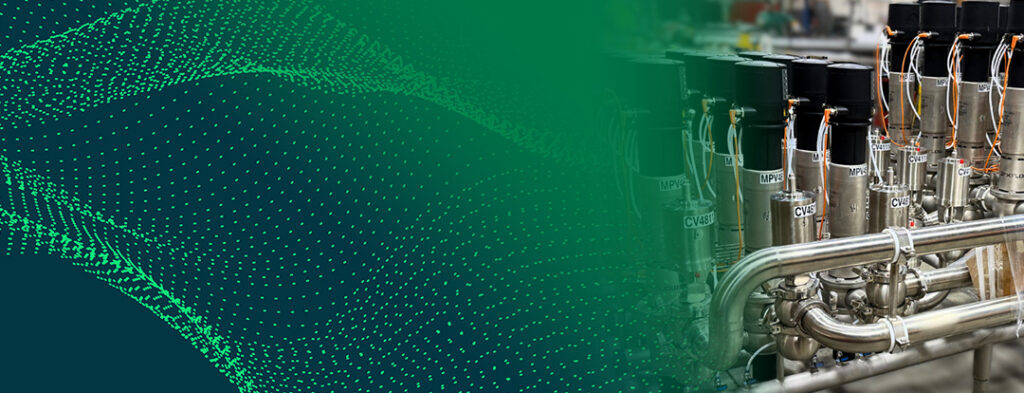
Industrial control systems (ICS)—including Supervisory Control and Data Acquisition (SCADA), programmable logic controllers (PLCs), and distributed control systems (DCS)—are the operational heartbeat of modern industry. They orchestrate manufacturing lines, regulate energy generation and distribution, control water treatment processes, and oversee transportation infrastructure. As organizations embrace digital transformation, these once-isolated systems increasingly connect to corporate IT networks, vendor portals, and cloud services. The benefits are undeniable: faster diagnostics, predictive maintenance, remote support, and data-driven optimization. But connectivity also expands the attack surface, attracting cybercriminals, hacktivists, and nation-state actors whose motives range from extortion to disruption and espionage.
For executives and engineering leaders, the challenge is twofold: secure systems built for stability rather than cybersecurity, and do it without compromising safety, reliability, or uptime. The solution lies in a pragmatic, layered approach that blends proven security controls with operational discipline and continuous improvement.
The Risk Landscape: Why ICS Is Uniquely Vulnerable
Legacy assets and protocols
Many plants still rely on controllers and human-machine interfaces (HMIs) deployed decades ago, designed for deterministic performance and physical safety—not modern cyber defense. These assets often use outdated or unauthenticated protocols and cannot be patched on conventional timelines. Even when patches exist, the operational risk of applying them during production can be prohibitive, extending exposure windows.
IT/OT convergence
Historically, operational technology (OT) lived behind air gaps. Today, business needs push data upstream to analytics, enterprise resource planning (ERP), and manufacturing execution systems (MES) platforms. Remote access is now essential for diagnostics, calibration, and vendor support. That connectivity blurs boundaries and introduces attack pathways from IT into OT—especially when segmentation is insufficient or identity governance is inconsistent.
Flat networks and weak segmentation
Unsegmented or loosely segmented networks permit lateral movement once attackers gain a foothold. A compromise in IT—say, via phishing or a misconfigured remote-access tool—can become a bridge to the control room, engineering workstations, or even safety systems if strict zones and conduits aren’t enforced.
Credential and access weaknesses
Default usernames, shared accounts, and privileged access that accumulates over time are still common in ICS environments. In parallel, vendor connections may be over-permissive, opaque, or poorly monitored, making them attractive to adversaries who prefer the path of least resistance.
Ransomware and targeted malware
General-purpose malware can cripple production by locking engineering workstations or file servers, even if controllers remain intact. More concerning are ICS-aware threats capable of manipulating process logic, altering setpoints, or disrupting communications—events that jeopardize safety and quality.
Human factors
Operational urgency sometimes leads to shortcuts: bypassed controls during maintenance, unlogged temporary changes, or “shadow” tools introduced to solve immediate problems. Without disciplined change management and training, these workarounds accumulate risk.
AI-driven acceleration
Attackers increasingly use AI to automate reconnaissance, craft tailored exploits, and coordinate attacks at speed. Meanwhile, organizations deploy AI and automation agents to streamline operations. If those agents are unaudited, overprivileged, or compromised, they can become novel insider threats.
Real Impacts: Safety, Reliability, and Cost
Cyber incidents in industrial environments rarely stay “digital.” They can halt production lines, damage equipment, degrade product quality, and compromise worker and community safety. Even when physical harm is avoided, downtime costs accumulate quickly—from lost output and expedited maintenance to regulatory scrutiny and reputational damage. For critical infrastructure operators, the stakes include service continuity and public trust. For manufacturers, the difference between a contained event and a plant-wide shutdown can be millions of dollars and weeks of schedule slippage.
Principles for Mitigation: A Defense-in-Depth Mindset
Defending ICS requires a layered strategy built on separation, visibility, identity control, and resilience. Below are practical steps to reduce risk while respecting operational realities:
1) Architect for Separation: Zones, Conduits, and Micro-Segmentation
Design the network with clear OT zones (e.g., control, safety, supervisory, and historian layers) and strict conduits governing how data flows between them. At the perimeter with IT, enforce demilitarized zones (DMZs) and one-way data diodes where appropriate. Within OT, apply micro-segmentation so a compromise in one cell does not cascade across production. Tie segmentation to roles: engineering workstations, historian servers, PLC networks, and vendor access should each inhabit distinct, tightly controlled segments.
2) Govern Access: Identity-Centric Controls and Least Privilege
Treat identity as a Tier-0 asset. Implement multi-factor authentication for all remote and privileged operations, and move from shared accounts to role-based access control (RBAC). Apply just-in-time access for vendors and technicians so elevated rights expire automatically. Centralize and audit sessions through secure remote-access gateways; record activity for forensics and accountability. Remove dormant accounts, rotate credentials, and enforce strong password policies with clear ownership and lifecycle management.
3) Secure Remote and Vendor Connections
Remote support is vital for uptime and cost control, but uncontrolled pathways are among the riskiest. Require all third-party access to traverse approved gateways with session supervision, command filtering (where feasible), and full audit logs. Limit access to specific assets at specific times and prohibit direct access to controllers from outside networks. When possible, use jump hosts inside OT with hardened baselines and monitor traffic for anomalies.
4) Patch with Purpose: Virtual Patching and Maintenance Windows
Not every ICS component can be patched quickly—or at all. Build a risk-based patch program that prioritizes high-impact vulnerabilities and aligns changes with scheduled maintenance windows. Where patching isn’t feasible, deploy virtual patching via intrusion prevention systems/intrusion detection systems (IPS/IDS) signatures, application allowlisting, and configuration hardening. Validate patches in a test environment before production rollout, and document changes meticulously for traceability.
5) Monitor Continuously: OT-Aware Detection and Correlated Telemetry
Traditional IT monitoring may miss ICS-specific signals. Use OT-aware anomaly detection tuned to process behavior, protocol baselines, and device roles. Integrate OT telemetry with your security information and event management/security operations center (SIEM/SOC) to correlate cyber events with physical access logs and operator actions. Establish thresholds for unusual commands, configuration changes, or traffic patterns between segments. Prioritize rapid triage and containment procedures to isolate affected zones without halting safe operations.
6) Harden Endpoints and Applications
Standardize gold images for engineering workstations and HMIs. Apply application allowlisting to constrain executables, disable unused services, and restrict USB usage. Enforce secure configurations for PLCs and network devices—disabling default credentials, locking down unused ports, and documenting approved ladder logic or function blocks. Use backups that are both offline and regularly tested for recoverability.
7) Prepare to Respond: Exercises, Playbooks, and OT-IT Collaboration
Create OT-specific incident response playbooks covering detection, containment, failover, and recovery. Run tabletop exercises with cross-functional teams—operations, engineering, safety, IT, compliance, and vendors—to clarify roles and decision thresholds. Define communications protocols for escalation, regulatory reporting, and stakeholder updates. Ensure response plans reflect safety constraints and align with process hazard analyses.
8) Train the Workforce: Culture as a Control
Cybersecurity is a team sport. Conduct role-based training for engineers, operators, and maintenance staff focused on secure change management, remote access hygiene, and recognizing suspicious behavior. Reinforce phishing awareness and the importance of reporting anomalies promptly. Encourage a culture where security concerns are surfaced early and addressed constructively.
9) Manage AI Deliberately: Treat Agents as Identities
If your plant adopts AI copilots or automation agents, onboard them like users: define permissions, segment their access, monitor sessions, and prohibit unapproved (“shadow”) tools. Establish review gates for agent actions that could alter control logic, setpoints, or safety interlocks. Track model provenance and configuration, and integrate agent activity into SOC workflows.
Practical Quick Wins for Plant Managers
- Map assets and pathways. Build an accurate inventory of controllers, HMIs, engineering stations, and vendor connections. Identify shadow devices and retire or secure them.
- Close credential gaps. Eliminate default accounts, rotate passwords, and remove unused privileges—especially on engineering workstations and remote-access portals.
- Segment the obvious. Create or tighten virtual local area networks (VLANs) between IT and OT; put HMIs and PLCs behind dedicated firewall rules; limit broadcast domains.
- Instrument visibility. Implement basic OT-aware monitoring on critical segments and begin collecting logs in a central location—even before full SIEM integration.
- Audit vendor access. Require a single controlled gateway for all third-party connections; disable ad hoc VPNs, RDP, and backdoors.
- Practice response. Run a short tabletop focused on ransomware in OT; document containment steps, communications, and recovery priorities.
Long-Term Programmatic Moves
- Reference architectures. Align to recognized ICS security frameworks and create plant templates for segmentation, access, and logging.
- Lifecycle modernization. Plan phased upgrades for legacy controllers and network gear; where replacement isn’t feasible, add compensating controls.
- Policy and governance. Codify remote access, change control, and patching into enforceable policies; assign clear ownership across IT and OT.
- Metrics and resilience. Track mean time to detect (MTTD), mean time to respond (MTTR), backup success rates, and incident drill frequency. Tie improvements to production reliability KPIs.
- Ecosystem alignment. Engage with vendors to standardize secure support models; insist on signed firmware, documented software bill of materials (SBOMs), and hardening guides.
The Bottom Line
Cybersecurity in industrial environments is no longer optional or solely an IT responsibility. It is essential for operational continuity, safety, and competitiveness. Success requires layered defenses that respect process constraints and prioritize identity and access control. Organizations must maintain visibility across the OT environment and enforce disciplined governance. Practical measures—such as segmentation, secure remote access, patch management, and OT-aware monitoring—significantly reduce risk without sacrificing uptime. In today’s landscape of AI-driven threats and growing connectivity, resilience depends on deliberate architecture, continuous workforce training, and a culture that balances speed with safety.
Sources & Further Reading
- “Building Robust OT Cybersecurity: A Strategic Framework for Industrial Operations,” Automation World [automationworld.com]
- “The Evolving Cybersecurity Challenge for Critical Infrastructure,” Infosecurity Magazine [https://www.infosecurity-magazine.com]
- “Five Predictions for OT Operations and Cybersecurity in 2026,” Automation.com [automation.com]
- “Cybersecurity Best Practices for Industrial Control Systems,” CISA/DOE (ICS Infographic) [cisa.gov]
- “Cyber security in Industrial Control Systems: Risk Mitigation Strategies,” International Journal of Engineering Fields [journalofengineering.org]
- “Securing Industrial Control Systems: Components, Cyber Threats, and Machine Learning‑Driven Defense Strategies,” MDPI Sensors [mdpi.com]